
Flat arches change how you stand, load your joints, and move through a shift. The wrong boot leaves your feet rolling inward, your knees aching, and your lower back tired by lunch. The right pair of boots pair stabilizes overpronation, cushions impact, and leaves room up front so toes can spread naturally.
This guide sticks to specific models with a standard spec layout so you can compare fast and pick what actually helps flat feet on the job!
How We Picked
For this list, every model had to meet a few non-negotiables: a removable insole so you can use orthotics, real midfoot structure or arch support, and a stable heel counter. Slip-resistant outsoles were mandatory, since stability is half the battle for flat arches.
We also prioritized wide size options, cushioned midsoles that hold up through long shifts, supportive shanks or plates, and uppers that don’t turn to mush after month two. Safety toes and EH (Electrical Hazard) ratings are noted where relevant. Finally, all five are offered on Amazon, so you can buy confidently with easy returns if the fit isn’t right!
The 5 Best Work Boots for Flat Feet are:
1. Orthofeet Granite Work Boot: Best for Medical or Orthopedic Support

Safety Toe: Soft toe
Arch/Support: Built-in orthotic insole with anatomical arch; firm heel cup
Outsole: Shock-absorbing rubber; slip-resistant
Fit/Widths: Roomy toe box; multiple widths; removable insoles
Best For: All-day standing, chronic foot pain/plantar fasciitis, wide forefeet
Why it stands out: This is the most “medical” boot of the bunch. Orthofeet builds its platform around pain relief, with targeted arch support, extra depth, and a toe box that eases forefoot pressure. For workers with plantar fasciitis or long-term arch issues, Granite is a lifeline.
2. Timberland PRO TiTAN 6″ Composite Toe: Best for All-Around Work Support

Safety Toe: Composite; EH
Arch/Support: Dual-density footbed + supportive midsole; good midfoot control
Outsole: Slip-resistant rubber
Fit/Widths: Known for a roomier toe box; removable footbed
Best For: Mixed indoor/outdoor trades needing comfort + protection
Why it stands out: Light on the foot, steady under pressure. TiTAN blends a roomy toe with serious midfoot stability, which means less fatigue on concrete or mixed terrain. It’s the all-arounder: protective enough for construction, comfortable enough for maintenance or shop work.
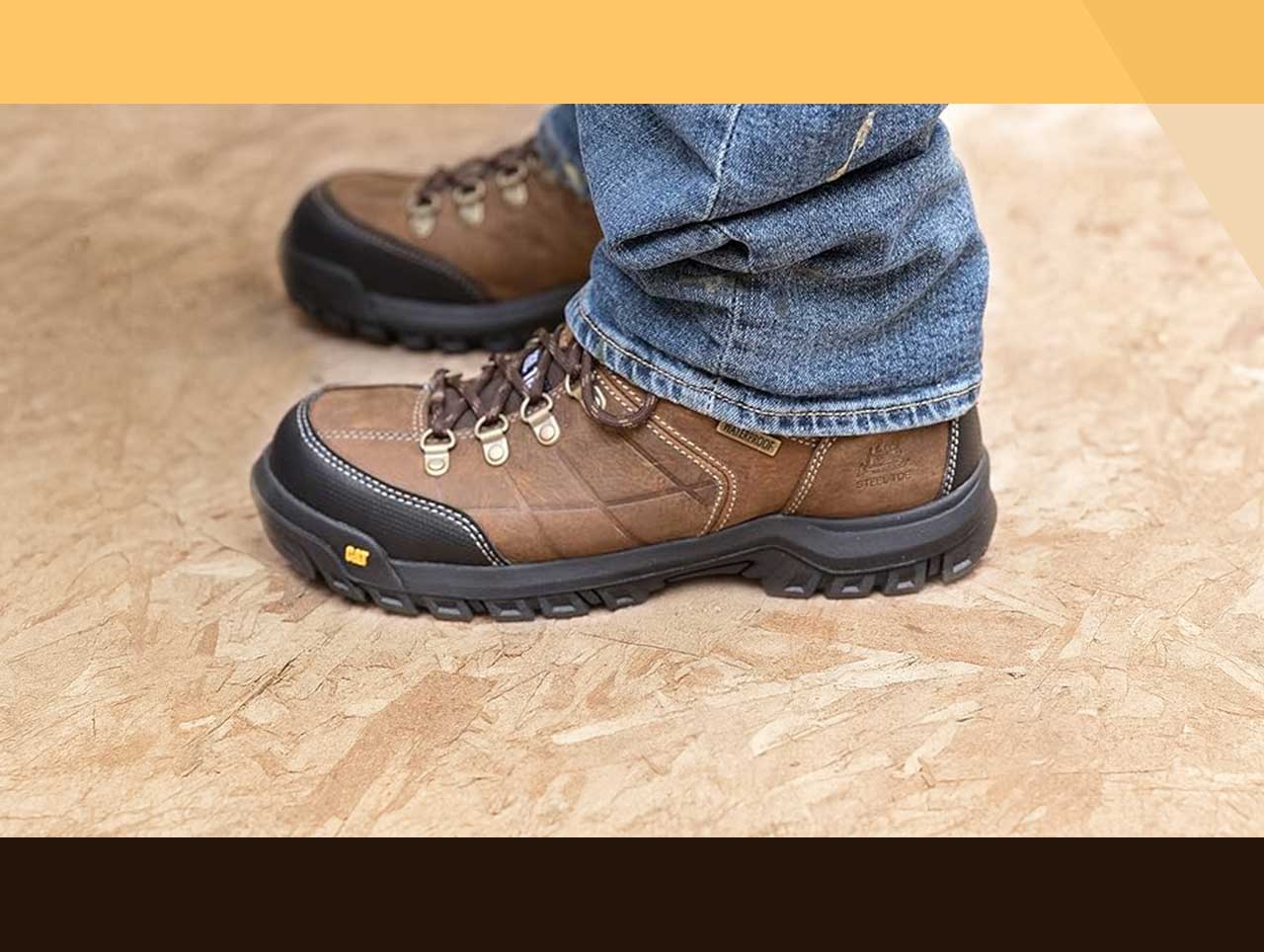
3. CAT Threshold Waterproof Steel Toe: Best for Stability on Slick Floors

Safety Toe: Steel; EH
Arch/Support: Cushioned insole with structured upper to limit inward roll
Outsole: Slip-resistant; stable platform
Fit/Widths: Standard & wide; removable insole
Best For: Wet shops, light industrial, crews that face spills and rain
Why it stands out: Threshold is all about consistency. The waterproof build keeps insoles dry so the support doesn’t flatten out, while the slip-resistant sole keeps you steady in puddles or shop spills. For flat feet, stability is king, and CAT delivers.
4. DEWALT Flex 6″ Steel Toe: Best for Budget Comfort with Wedge

Safety Toe: Steel
Arch/Support: ProComfort insole; wedge helps distribute load evenly
Outsole: Wedge sole; slip-resistant
Fit/Widths: Removable insole; sizes vary by listing
Best For: Value shoppers who want cushioned, even weight-bearing
Why it stands out: Flat arches love wedges. By spreading pressure across the foot instead of loading your heel and forefoot, Flex eases strain. Add a ProComfort insole and you’ve got real support at a price point that won’t sting.
5. Wolverine Moc-Toe 6″: Best for Wedge Comfort for Orthotics

Safety Toe: Soft toe
Arch/Support: Removable full-cushion footbed; supportive wedge for pressure spread
Outsole: Wedge rubber; steady underfoot
Fit/Widths: Break-in friendly leather; multiple widths in many sizes
Best For: Flat, hard floors; users who plan to drop in custom insoles
Why it stands out: The classic moc-toe wedge shines when paired with orthotics. Even without them, the removable cushion footbed and pressure-spreading outsole reduce strain for long days on concrete. A reliable, customizable platform.
Flat Feet 101: What’s Happening Biomechanically
Flat feet, also called fallen arches, mean the midfoot collapses so the entire sole touches the ground. That collapse drives overpronation: your feet roll inward with every step. Over time, this changes how your knees and hips track, leading to leg fatigue and lower back strain.
Supportive boots break that cycle. A firm heel counter stops the inward roll, while a structured midsole and roomy toe box keep your stance more neutral. The result: less strain on joints, fewer hot spots, and longer comfort on concrete, ladders, or shop floors.
Why Support Matters
If you have flat feet, you’ve probably felt the “end of shift roll”: where your arches ache and your knees drift inward. Good boots fight that. Arch guidance and snug heel fit keep alignment, cutting down on calf and Achilles strain. Shock-absorbing midsoles—think dual-density PU or EVA—spread impact across the whole foot instead of hammering your heels. A stable outsole, especially a wedge, prevents that late-day wobble when your arches get tired.
In short, without real support, your body fights itself. With it, you just work.
Key Features to Look For
When you’re shopping for boots that work with flat feet, keep these boxes checked:
- Removable insole (orthotic-ready)
- Real midfoot support or shank
- Wide or roomy toe box
- Slip-resistant outsole with a stable base (wedge or broad heel)
- Uppers that hold shape instead of collapsing after a few weeks
Fit Tips for Flat Feet to Maximize Your Comfort
Fit can make or break a supportive boot. Try them on after work, when your feet are at their largest. Lace the midfoot snug to lock your heel, but keep the forefoot moderate so your toes can splay. Walk ramps or stairs to test heel hold. If you’re adding orthotics, make sure the insoles are removable and that there’s enough internal volume. And when in doubt, go wider, not longer.
Orthotics: When and How to Use Them for Support
Most stock insoles will help for a few weeks, but custom or high-quality over-the-counter orthotics often take the comfort up another level. If you’re adding them, break boots in gradually—one or two hours a day at first—so your body adjusts to the new alignment. Pair with moisture-wicking socks to cut friction and keep cushioning responsive.
Waterproofing & Weather: Don’t Forget to Protect Your Soles
Dry liners matter. When your footbed gets soggy, it packs out and loses arch shape, which is brutal for flat arches. Rinse mud and salt off leather, pull insoles to air-dry, and condition leather so it sheds water instead of soaking it up. Conditioning won’t replace a waterproof liner, but it extends life and comfort.
Bottom Line: Quick Compare
Orthofeet Granite: maximum arch guidance and pain relief focus.
Timberland PRO TiTAN: best overall blend of protection, cushioning, and toe room.
CAT Threshold: waterproof stability for slick shop floors.
DEWALT Flex: budget-friendly wedge comfort, orthotic-ready.
Wolverine Moc Toe: classic wedge that pairs perfectly with custom insoles.
Flat arches don’t have to mean sore knees and tired backs. With the right structure underfoot, your stride stays neutral, your joints stay aligned, and your shift feels shorter. Pick the boot that matches your work, and your feet will thank you.